
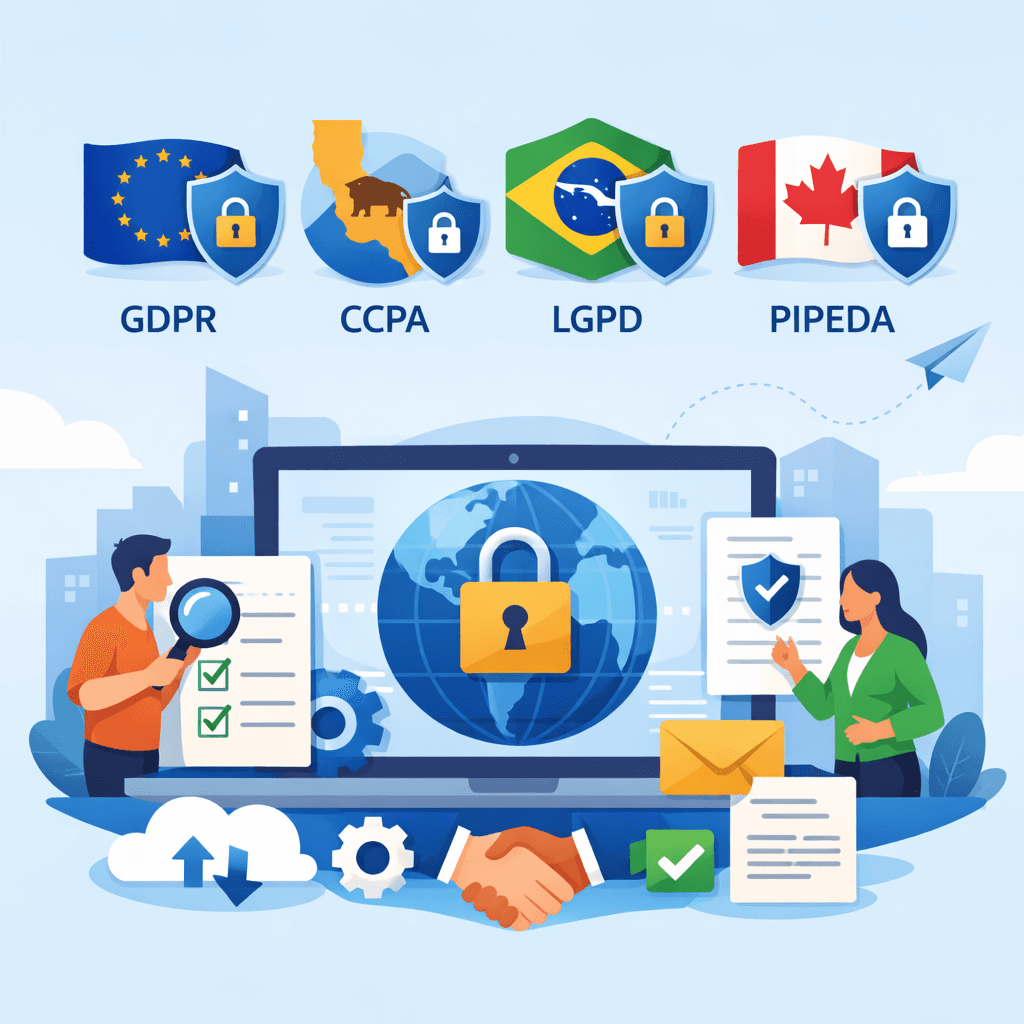
GDPR, CCPA, LGPD, PIPEDA — What's the Difference and How to Stay Compliant Across All of Them
Understanding the differences between GDPR, CCPA, LGPD, and PIPEDA is crucial for businesses navigating the complex landscape of data protection laws. Each regulation has distinct requirements, and compliance can significantly impact how you manage customer data and privacy. This article will break down these laws and guide you on compliance strategies to enhance your business's credibility and trustworthiness.
Table of Contents
Understanding GDPR
The General Data Protection Regulation (GDPR) is a comprehensive data protection law that governs how businesses collect, store, and use personal data in the European Union. Implemented in 2018, GDPR emphasizes transparency and user consent. Key aspects include:
User Rights: Individuals have the right to access, rectify, and erase their data.
Data Protection Officers: Some organizations must appoint a DPO to oversee compliance.
By adhering to GDPR, businesses can not only avoid hefty fines but also build trust with clients who value their privacy.
Overview of CCPA
The California Consumer Privacy Act (CCPA), effective from January 2020, provides California residents with rights regarding their personal information. Key features include:
Right to Know: Consumers can request details about the personal data collected about them.
Right to Delete: Consumers can request the deletion of their personal information.
For businesses, compliance with CCPA means enhancing customer relationships and demonstrating a commitment to privacy.
Insights into LGPD
The Lei Geral de Proteção de Dados (LGPD), Brazil’s data protection law, closely mirrors GDPR. Enforced since September 2020, LGPD aims to ensure that personal data is processed responsibly. Important points include:
Consent Requirement: Businesses must obtain clear consent from data subjects.
Fines for Non-compliance: Penalties can reach 2% of a company’s revenue in Brazil, up to a maximum of R$50 million.
By aligning with LGPD, companies can open doors to the South American market and enhance their global reputation.
PIPEDA Explained
The Personal Information Protection and Electronic Documents Act (PIPEDA) governs how private sector organizations collect, use, and disclose personal information in Canada. Key highlights include:
Accountability: Organizations must appoint individuals responsible for compliance.
Transparency: Businesses must inform individuals about their data usage.
Staying compliant with PIPEDA reinforces a company’s dedication to safeguarding customer information, fostering loyalty among Canadian consumers.
Comparative Analysis
Regulation | Region | Key Rights | Penalties |
|---|---|---|---|
GDPR | EU | Right to access, erasure | Up to €20 million or 4% of revenue |
CCPA | CA | Right to know, delete | Up to $7,500 per violation |
LGPD | Brazil | Consent, access | Up to R$50 million |
PIPEDA | Canada | Transparency, accountability | Up to $100,000 per breach |
Strategies for Compliance
To ensure compliance across all these regulations, consider the following strategies:
Conduct Regular Audits: Regularly review your data practices to ensure compliance.
Implement Privacy Policies: Develop clear privacy policies that align with each regulation.
Train Employees: Educate your team on data protection laws and best practices.
Leverage Technology: Utilize tools like Odoo development and AI services to automate compliance processes efficiently.
By adopting these strategies, businesses can not only comply with regulations but also enhance their operational efficiency and client trust.
In conclusion, understanding the nuances of GDPR, CCPA, LGPD, and PIPEDA is essential for effective data management. By implementing robust compliance measures, you can transform your approach to data protection and elevate your business's reputation in the market. Partner with us for expert advice and innovative solutions tailored to your specific needs.